Introduction
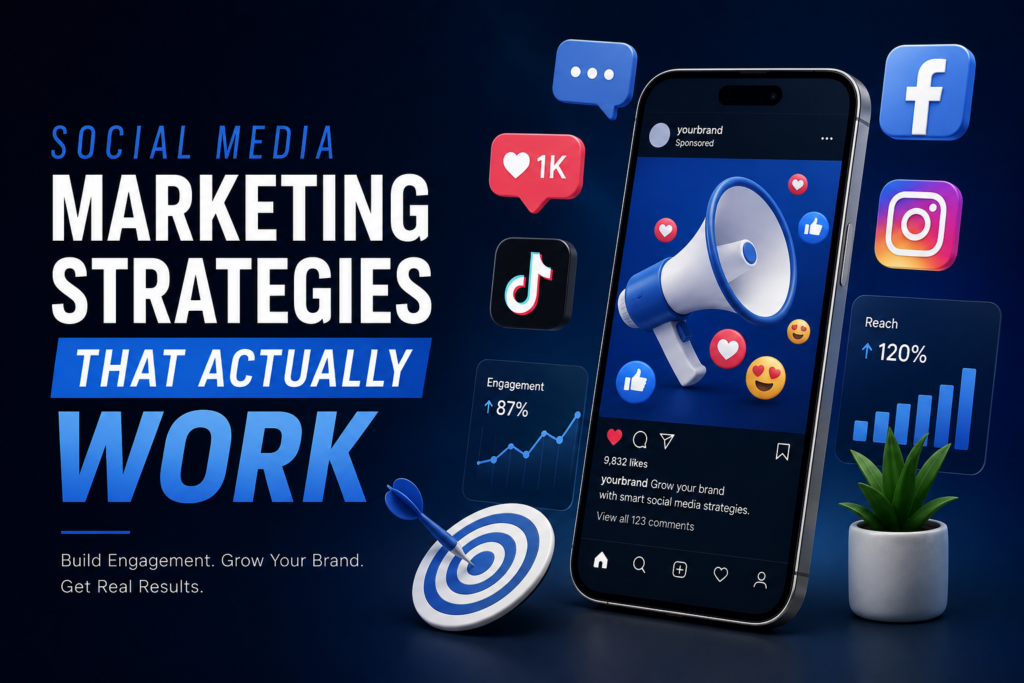
Social media has become one of the most powerful tools for businesses to connect with their audience, build brand awareness, and drive sales. However, simply posting content is no longer enough. With increasing competition and changing algorithms, businesses need a well-planned strategy to achieve meaningful results. By focusing on the right platforms, creating valuable content, and analyzing performance, you can turn social media into a powerful growth engine for your brand.
Define Clear Goals
Every successful social media campaign starts with clear objectives. Ask yourself what you want to achieve—whether it’s increasing brand awareness, generating leads, driving website traffic, or boosting sales. Having measurable goals helps you create focused campaigns and track your success more effectively.
Know Your Target Audience
Understanding your audience is essential for creating content that resonates. Research their age, interests, online behavior, and preferred social media platforms. When you know who you’re speaking to, you can create personalized content that captures attention and encourages engagement.
Create Valuable and Consistent Content
Consistency is one of the keys to social media success. Develop a content calendar that includes educational posts, behind-the-scenes content, customer testimonials, industry tips, videos, infographics, and promotional offers. High-quality content not only attracts followers but also builds trust and credibility over time.
Use Short-Form Video Content
Short-form videos have become one of the most effective content formats across platforms like Instagram Reels, Facebook Reels, YouTube Shorts, and TikTok. These videos are highly engaging, easy to consume, and often receive greater organic reach than static posts. Focus on creating informative, entertaining, or problem-solving videos that encourage viewers to interact with your brand.
Engage With Your Audience
Social media is about building relationships, not just broadcasting messages. Respond to comments, reply to direct messages, participate in conversations, and encourage user-generated content. Active engagement helps build trust and creates a loyal community around your brand.
Invest in Paid Advertising
Organic reach alone may not be enough to achieve your marketing goals. Running targeted advertising campaigns on platforms like Facebook and Instagram allows you to reach the right audience based on interests, demographics, and behaviors. Paid ads can significantly increase website traffic, leads, and conversions when combined with strong creative content.
Monitor Performance and Optimize
Successful marketers continuously analyze their social media performance. Track important metrics such as reach, engagement, click-through rates, follower growth, and conversions. Use these insights to identify what works best and refine your strategy for even better results.
Conclusion
Effective social media marketing requires more than regular posting—it demands a strategic approach focused on your audience, valuable content, consistent engagement, and continuous optimization. By setting clear goals, creating meaningful content, leveraging short-form videos, and using data to improve performance, businesses can build stronger relationships with their audience and achieve long-term growth. A well-executed social media strategy not only increases visibility but also turns followers into loyal customers and brand advocates.